
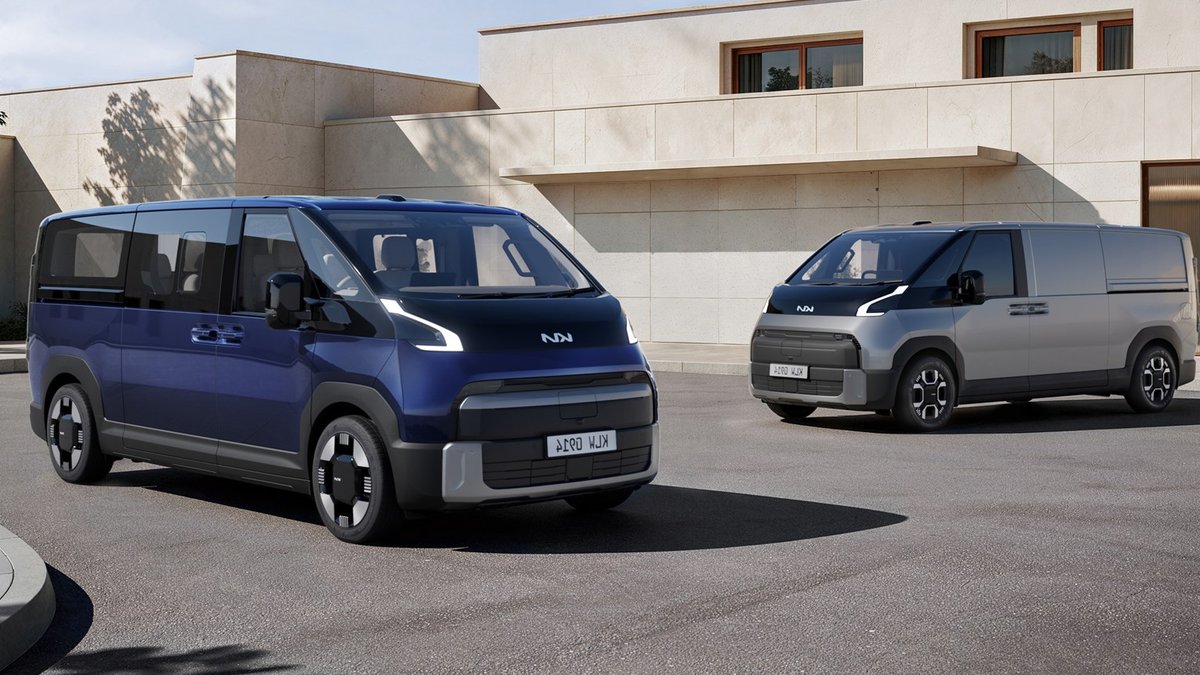
Kia has entered the electric van market with its second model, the PV7, aiming directly at the Ford E-Transit Custom and Volkswagen Transporter. Unveiled at the 2026 IAA Transportation show in Hanover, the PV7 is positioned as the larger sibling to the multi-award-winning PV5. The new model is offered in both Cargo and Passenger configurations, presenting a direct competitive challenge to established rivals in the segment.
A 96.2kWh battery option is the highlight for the standard PV7, delivering an anticipated WLTP driving range of at least 285 miles per charge. This figure places the van ahead of current competitors, although it falls just short of the upcoming Renault Trafic E-Tech, which promises up to 292 miles. The vehicle utilizes the same E-GMP.S skateboard structure as the PV5 but is upscaled for this larger footprint. A smaller 71.5kWh battery will also be available in certain markets. Standard front-wheel-drive produces up to 200kW of power, with four-wheel-drive promised for the future. Even single-motor variants offer 310lb ft of torque.
Powering up is expected to be fast thanks to the 800v architecture and 350kW charging capability, which should deliver 10-80 percent charge in approximately 25 minutes. The front charging port accommodates both AC and DC inputs, while an optional side port adds an additional AC route toward the rear. The Cargo variant features a ‘Mobile Workspace’ layered dashboard with open compartments and an Onyx Black finish. The Passenger version includes a choice of matte paint and replaceable cladding to protect against low-speed damage. It also offers twin barn doors or a large top-opening tailgate, along with a Smart Walk Away system that powers the sliding side door when the key is left in a pocket.
Inside, the cabin features 12.9-inch and 14.6-inch screens running Kia’s Pleos Connect operating system, which is based on Android Auto and includes a ‘smartphone-like’ user experience. Safety features include a built-in dashcam for driving footage. Recycled and bio-based materials are used throughout the interior, and Kia has optimized the step-in process and front seat geometry to reduce driver fatigue. Payload capacity ranges from 1165kg for the Long variant to 1200kg for the Compact option.
Passenger Configurations
The Passenger variant offers significant flexibility, with seven-, nine-, and 11-seater configurations available. The 11-seater is exclusive to the Korean market. The seven-seater uses Long-Rail Easy Remove seats that can be repositioned, while the nine-seater is available in three- and four-row setups depending on the required boot space. This makes the PV7 an attractive all-electric alternative to the VW Multivan (recently renamed the Caravelle in the UK) and the ID. Buzz, E-Tourneo Custom, and other long-wheelbase vans in its class. Kia is planning 23 variants of the van alone, plus a chassis cab and specialized conversions, some of which will be built in-house at its PBV Conversion Center in South Korea.
It will likely be a few years before these vans hit dealerships. The PV7 is not set to go on sale until the second half of 2027. As a result, no pricing information is available yet. If the pricing strategy for the PV5 is any indication, value is expected to be a key selling point. The PV7 is part of the broader E-GMP.S platform, used by vehicles ranging from the EV9 to the Ioniq 6 N. While the 285-mile range is impressive for the class, the new Renault Trafic E-Tech, which launches in 2027, promises up to 292 miles and a 1300kg payload, potentially reclaiming the top spot in the segment.
Interior and Technology
The cabin houses dual screens measuring 12.9 and 14.6 inches, running the Pleos Connect operating system. This software is built on Android Auto and aims for a smartphone-like experience. Features include a customisable interface, an app marketplace, over-the-air updates, and connected navigation. A built-in voice assistant called Gleo AI provides natural language control. Despite the digital focus, the controls retain physical buttons for essential functions.
Recycled and bio-based materials are used throughout the interior. Kia has optimized the geometry of the front seats and the step-in process to help reduce driver fatigue. Cargo models feature a layered dashboard with a “Mobile Workspace” design. This includes open compartments, enclosed storage, ambient lighting, and a choice of two-tone interior color palettes.
Production and Availability
Kia plans to produce 23 different variants of the van. This includes chassis cab options and specialized conversions. Some of these conversions will be created and built in-house at the company’s PBV Conversion Center in South Korea. The vehicle will be offered in multiple lengths, including Long and Compact options, with roof heights also varying. A “heavy-load” driving mode is included for the Cargo version to assist when carrying maximum weight.
The vehicle is scheduled to launch in the second half of 2027. At this time, pricing remains undisclosed. However, the company suggests value will be a significant selling point. The PV7 is part of the broader E-GMP.S platform, which is the company’s “Platform Beyond Vehicle” van format. This platform underpins other models such as the EV9 and Ioniq 6 N. The launch of the PV7 adds another option to the electric van market, competing against the VW Multivan, ID. Buzz, and E-Tourneo Custom.


