
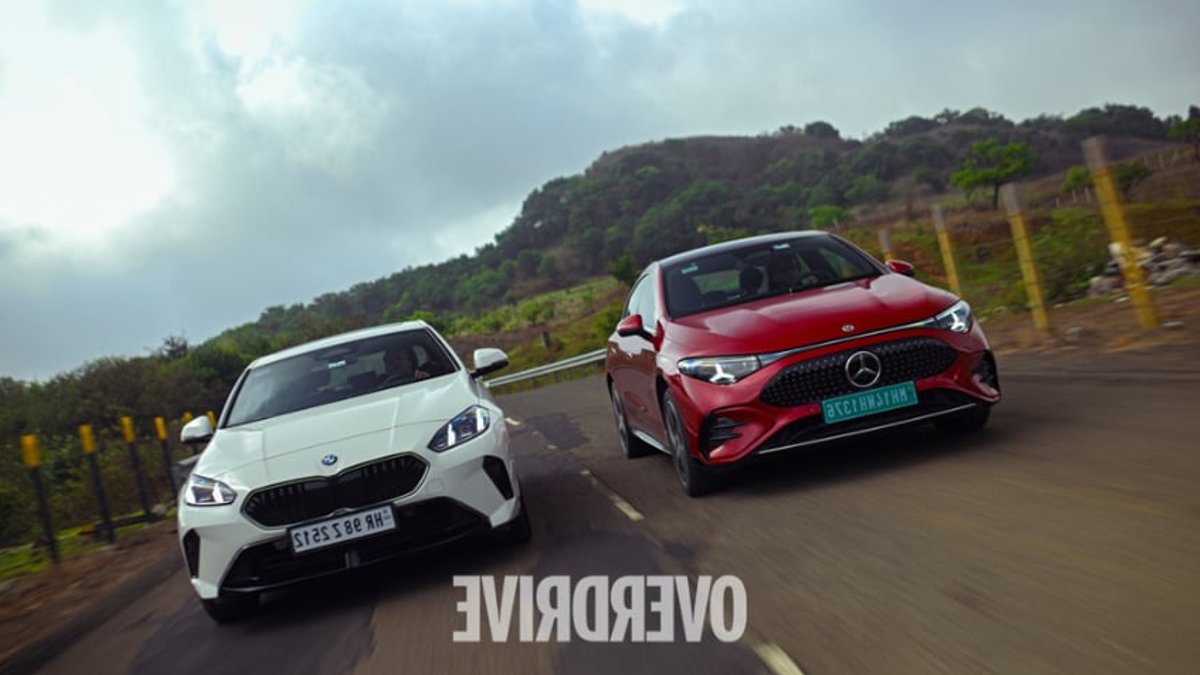
The BMW 218 Gran Coupé and Mercedes-Benz CLA 250+ showcase different approaches to entry-luxury sedans. One relies on traditional design, while the other introduces electrification to the segment.
The shape of luxury
Both models prioritize style alongside performance. The BMW adopts an aggressive stance with its illuminated kidney grille, M Sport accents, and sloping roofline. This design appeals to buyers seeking a compact luxury car that avoids SUV proportions.
The CLA presents a more refined appearance. Its extended body and sleek lines create a sophisticated look, while the EV platform—featuring a smoother front and aerodynamic surfaces—gives it the appearance of a smaller concept vehicle. The BMW emphasizes sportiness, while the Mercedes prioritizes a premium aesthetic.
This distinction is important because many buyers in this category transition from mainstream sedans like the Volkswagen Virtus or Hyundai Tucson, which now include features such as large touchscreens, ventilated seats, and advanced safety systems. A luxury badge alone no longer suffices. The vehicle must deliver a noticeable improvement in experience.
Tech and cabin experience
The BMW delivers essential luxury features. Its curved display, BMW OS9, head-up display, Harman Kardon audio, and panoramic sunroof create a modern feel. The driving position remains driver-focused, with M Sport elements adding character. However, the CLA sets a higher standard.
Mercedes’ MB.OS functions as more than an infotainment system. It serves as the car’s central control system, integrating navigation, software updates, and powertrain management. The CLA also includes standard ADAS. The interior feels less like an entry-level model and more like the foundation for a new generation of vehicles.
Related: Swift Glanza Nios Face Off in Comparison
The BMW provides a premium experience within its size class. The Mercedes delivers a premium experience regardless of its market position.
Power and performance
The BMW’s 1.5-liter three-cylinder turbo-petrol engine produces 156 hp and 230 Nm of torque, reaching 100 km/h in 8.6 seconds. This performance is adequate for the segment. In everyday use, the torque spread keeps it easy in the city, and the paddle shifters and Sport Boost amp up the involvement.
The CLA offers stronger performance. The electric powertrain provides immediate torque and a single-speed transmission, making it more responsive in urban driving, while the BMW’s seven-speed dual-clutch gearbox provides a more engaging mechanical feel.
The CLA also excels in refinement. Silence has become a luxury feature, and the Mercedes delivers it consistently. The BMW’s engine, while efficient, cannot match the EV’s quiet operation. However, the 218 Gran Coupé compensates with its smaller dimensions and sharper handling. It performs better on winding roads, with slight rear-end movement that electronics manage effectively. The CLA feels stable and composed, better suited for highway driving than spirited cornering.
The BMW’s three-cylinder engine, once a practical choice, now appears limited in a segment where competitors offer more power.
Price and practicality
The BMW suits buyers without home charging access, avoiding the challenges of EV ownership. The CLA, while more advanced, carries a higher price that reflects its technology and performance.
Related: Crafting Forever: Exploring Engagement Rings in Clapham, London
For some, the BMW’s appeal lies in its size and driving feel. It suits weekend drives on curving roads. The CLA serves as a better daily driver—quieter, faster, and more forward-looking. However, it requires more from its owner, including charging infrastructure and acceptance of new technology.
Previous powertrain shifts, such as the transition from naturally aspirated engines to turbocharging or the introduction of hybrids, faced initial skepticism. The CLA’s electric approach represents a similar evolution. It isn’t merely a novelty but a reimagining of what an entry-luxury sedan should provide. The BMW X5 2025 debuts at a higher price point, yet the CLA’s advancements may influence future expectations across segments.
The BMW 218 Gran Coupé still appeals to a specific audience. Buyers who value petrol convenience, compact dimensions, and a driver-focused experience will find it compelling. It remains the more traditional choice, aligning with conventional luxury sedan expectations.
The CLA makes a stronger overall case. It offers superior smoothness, acceleration, and technology, whether purchased as an upgrade from a mainstream model or as a second luxury vehicle. It doesn’t just compete with the 218 Gran Coupé—it challenges buyers to reconsider their priorities.
As more electric luxury models enter the market, the BMW’s formula will face increasing scrutiny. The CLA 250+ doesn’t eliminate the segment but demonstrates that established conventions no longer apply.


