
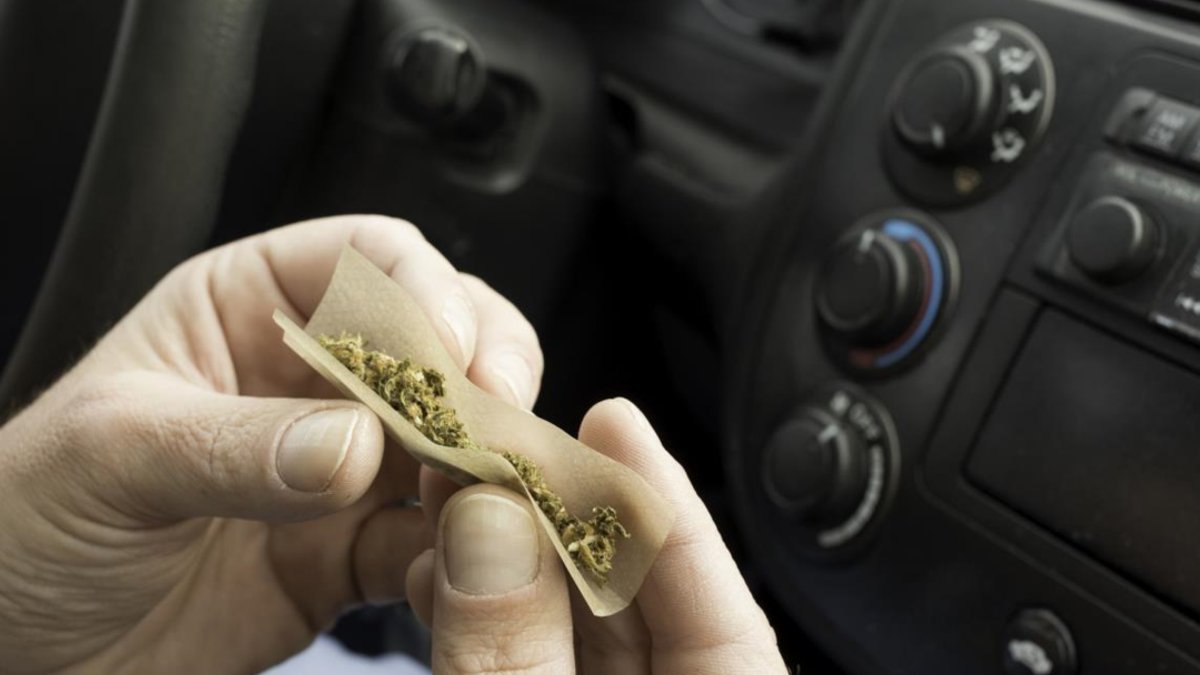
UK fleets are facing a growing risk from their drivers falling foul of drink- and drug-driving legislation, thanks to lower blood alcohol limits being considered by Government and a zero-tolerance approach to drugs.
Cannabis use persists at high levels, with 6.5% of adults aged 16 to 59, or roughly 2.3 million people, reporting use in the past year, according to the latest Office for National Statistics data from March 2025. Among those aged 16 to 24, the rate climbs to 12.5%. While precise conviction figures for cannabis-related driving offenses are scarce, roadside police tests show that THC and cocaine together account for 83% of all drug-detection cases, with THC being the dominant factor.
The legal framework for drug-driving has been active since 2015, when England and Wales adopted a zero-tolerance system for eight illegal drugs and a risk-based approach for eight medically prescribed substances. Convictions under this law have risen sharply, from 4,924 in 2016 to 21,791 in 2025—a more than fourfold increase. The risk is most pronounced among young men, with 90% of drug-impaired drivers involved in collisions being male, and 40% falling within the 17 to 29 age group, per Department for Transport figures.
How THC lingers long after use
The law creates challenges due to the complexity of tracking cannabis impairment. Unlike alcohol, where impairment thresholds are tied to measurable blood levels, the 2 microgrammes-per-litre THC limit can be exceeded days after use-even when a driver feels unaffected. The UK Government says it is “unable to provide any guidance on what amounts of dosage would equate to being over the specified limits” due to variables like physical characteristics and metabolism. A single cannabis ‘joint’ could put you over the legal limit for the next two-to-three days, according to MAJ Law.
There is no reliable formula for calculating when an individual will fall below two microgrammes of THC per litre of blood (2µg/L). While the World Health Organisation recommends a 0.05% blood alcohol concentration (BAC) limit for the general population, it offers no equivalent for THC due to unpredictable clearance rates. Some countries set higher thresholds-Germany at 3.5µg/L, the Netherlands at 3µg/L-whereas the UK enforces zero tolerance for any detectable amount.
Related Post: Land Rover tests electric Defender Sport with mysterious rear attachment
A Department for Transport road safety campaign this summer found that 41% of young men aged 17 to 29 believe driving after drug use is acceptable if they feel fine. The campaign highlights that psychoactive effects often diminish long before the substance clears the bloodstream, meaning a driver could legally exceed limits without being impaired.
Fleets scramble to enforce stricter rules
Fleets are tightening policies in response. A Fleet News survey revealed that 84% of operators now enforce drug-driving rules, though only 66% have dedicated policies—the remainder integrate drug use into broader safety guidelines. The Association of Fleet Professionals said it’s imperative that fleets have the right policies in place and that these are backed by action.
Enforcement remains inconsistent. The operational lead at the National Police Chiefs’ Council (NPCC) for Operation Limit, Chief Superintendent Marc Clothier, believes fleets have a key road safety role to play. He told Fleet News: “Random testing, a zero-tolerance approach to drink or drugs and monitoring of driver fitness, can all support ensuring drivers are not driving impaired. It is also important that drivers are encouraged to report any medication they are using and to understand how this might impact their driving.”
The UK government is considering lowering the drink-drive limit, following a consultation which ended in May, after Scotland lowered its limit. The current limit of 0.08%-unchanged since 1967-is the highest in Europe. A consultation concluded in May, but no decision has been finalized. If the limit is lowered, fleets will face changes to drink-drive rules, in addition to the existing risks from drug-driving.
Legal and Practical Challenges in Enforcing Cannabis Impairment Standards
In the US, three states, Washington, Montana, and Illinois, have adopted a 5 micrograms-per-litre THC limit, while others retain the UK’s zero-tolerance approach. Advocacy groups, including MAJ Law, have called for UK legislation to be clearer, evidence-based, and uniformly applied to ensure fairness in enforcement and public understanding.


