
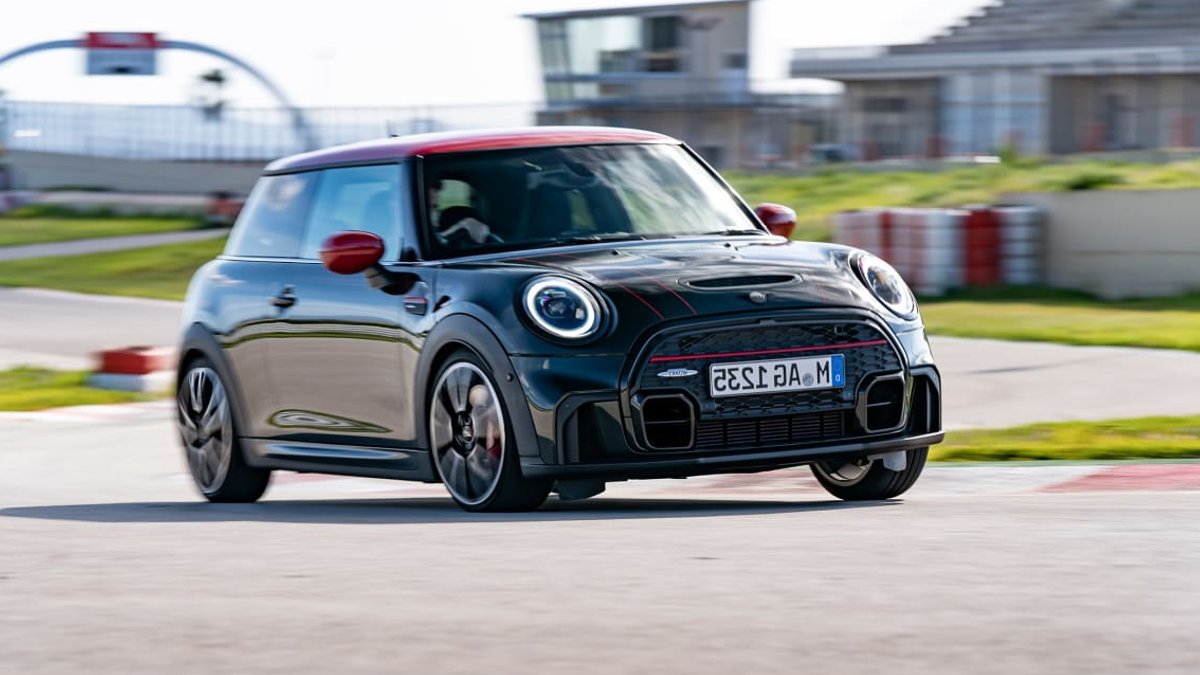
The 2021 Mini John Cooper Works has received a light refresh, offering updated styling and interior technology without altering its mechanical foundation. Production began at Mini’s Oxford plant, with prices set at £28,815 for the three-door hatch and £32,215 for the cabriolet.
Subtle styling tweaks, familiar powertrain
New front and rear bumpers introduce a larger painted grille surround and sharper graphics inspired by the GP3 model. Tinted headlights and taillights, also taken from the GP3, give the car a more assertive appearance. The interior now features an instrument cluster matching the GP3 and Mini Electric, combining a larger color display with a physical needle under a single glass cover.
A revised steering wheel and minor dashboard updates accompany the improved infotainment system, which Mini claims is easier to use. The embedded screen sits in a more cohesive housing, though the BMW-derived software remains largely unchanged.
Related: Mercedes GT53 uses fake V6 sound for value
Under the hood, the model keeps its turbocharged 2.0-liter four-cylinder petrol engine, generating 231 horsepower and 236 lb-ft of torque. The engine, shared with BMW models like the Toyota Supra and Morgan Plus 4, delivers peak torque at 1,450 rpm, providing quick response despite its modest output.
Transmission options include a six-speed manual or an eight-speed automatic, both directing power to the front wheels. The JCW also includes upgraded four-piston brakes and standard 17-inch wheels, with 18-inch alloys available as an option.
Chassis carries over, adaptive dampers optional
The car’s platform remains the same, built on the UKL architecture used for front-wheel-drive BMW models. Suspension consists of MacPherson struts at the front and a multi-link setup at the rear, with passive dampers as standard. Adaptive dampers are available but remain an extra-cost feature.
Related: Yokohama launches new tyres for SUVs
The absence of mechanical changes indicates Mini aimed to keep the JCW competitive as the market moves toward electrification. The brand has shown an all-electric version with the Mini Electric Pacesetter, a Formula E pace car. That model suggests future performance Minis may drop internal combustion entirely.
For now, the refreshed JCW delivers a familiar experience with enough visual and tech updates to maintain its position. The hot hatch segment faces uncertainty. Some brands continue investing in internal combustion, while others shift to hybrid or electric alternatives. This refresh feels like a temporary measure, keeping the car current without a full redesign. The engine’s strong torque curve and precise steering remain key strengths.
Deliveries of the updated model will start in the coming weeks, with the first units already leaving the Oxford production line.


