
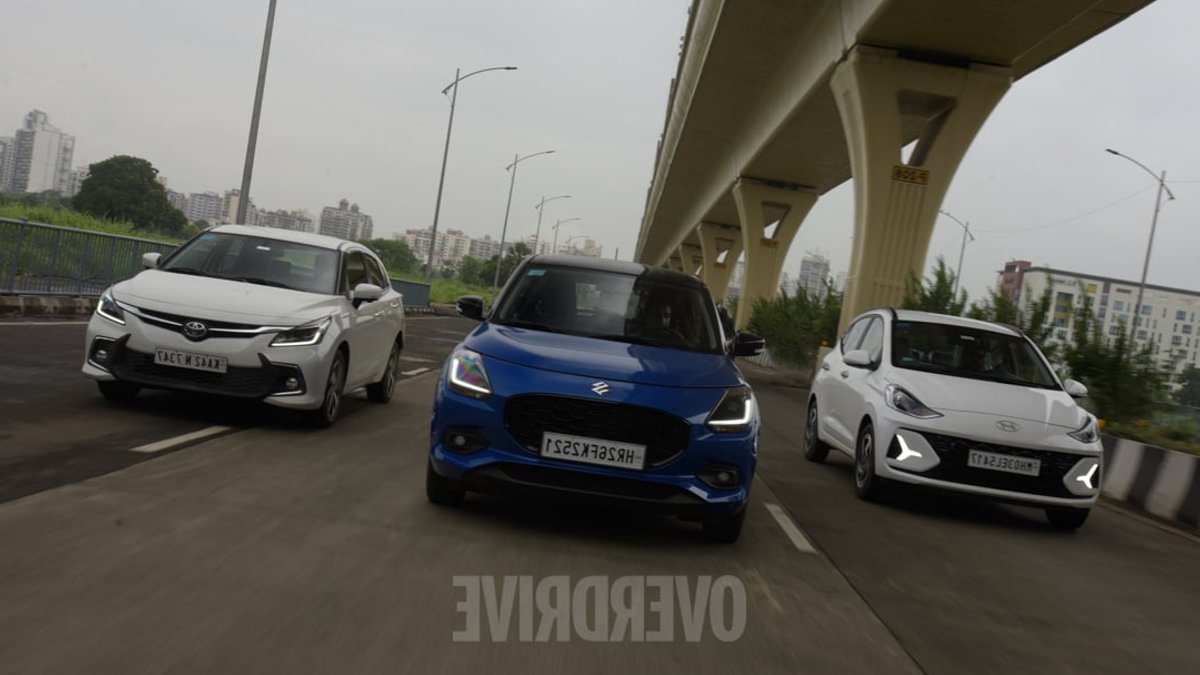
The latest comparison of the Maruti Suzuki Swift vs Toyota Glanza vs Hyundai Nios highlights how each hatchback balances size, styling and practicality in a market dominated by SUVs.
Exterior looks and dimensions
The Glanza stretches 130 mm longer and 20 mm wider than the Swift, yet the latter’s iconic silhouette still draws more attention. Maruti Suzuki’s new Swift features a clamshell bonnet, a wide grille and a pronounced shoulder line that lend a premium feel uncommon at its price point. Its rear is more compact, which some may find less appealing, but the conventional door handles add convenience.
Related: 5 Reasons a Small Skoda SUV Should Be Your Next Family Car
The Toyota‑derived Glanza, though larger, does not automatically translate to a stronger road presence. Its flatter bodywork and simpler roofline give it a subdued elegance, while the Baleno remains the more mature counterpart to the Swift.
Hyundai’s Grand i10 Nios, refreshed with a minor facelift, shares the Swift’s height but narrows the track, creating a tall‑roof impression. Its grille and glass detailing are more elaborate, yet the omission of fog lamps in the update detracts from the overall appeal.
Related: 5 Ways a Subaru Demo Car for Sale Perth Can Upgrade Your Life
Boot space varies noticeably. The Nios offers a 260‑litre compartment with a low lip and wide opening, whereas the Swift provides a marginally larger 265‑litre area and a 60:40 split that eases luggage handling. The Glanza leads with a 318‑litre boot, the deepest of the three, though a high lip and small opening limit usability.
Interior quality and practicality
Inside the Swift, a layered horizontal theme and silver‑toned vents create a contemporary ambience, but the single‑tone dark cabin feels cramped. Driver ergonomics remain strong, yet the use of scratchy plastics and thin door trims suggests room for improvement.
Related: Beyond the Bling: Birmingham Jewelers Get Technical with Lab-Grown Diamonds
The Glanza’s dash presents angular lines with satin and gloss black finishes that improve the cabin’s perceived quality. Soft surfaces on the doors and centre armrest, along with telescopic steering adjustment and a heads‑up display, add a sense of refinement.
Hyundai’s Nios adopts a grey‑off‑white palette that visually expands the space. Despite the sparse use of premium materials, the tactile switchgear and part‑leatherette upholstery provide a higher‑end feel.


