
Seven Performance Cars That Vanished Without a Successor
While we fondly recall numerous performance cars, some losses are more deeply felt. It’s understandable when an outdated model is replaced by a superior one, but it’s far more impactful when a manufacturer discontinues an entire category of vehicles without offering a substitute. That’s what happened to these seven cars below.
That’s what happened to these seven cars below. Some fell victim to tightening emissions rules, others to changing tastes or manufacturers deciding there simply wasn’t enough money in them anymore. Whatever the reason, each left behind a gap that still hasn’t really been filled.
The Honda S2000: A Pure Roadster Left Behind
The Honda S2000 was about as pure as it got. Boasting a naturally aspirated four-cylinder engine that loved revs, it combined that with a six-speed manual gearbox and rear-wheel drive — with not much else to get between the driver and the experience. Even today, the S2000 feels like a product of a very particular moment in Japanese performance-car history.
Honda ended production in 2009 and, remarkably, has never really replaced it. Yes, the Civic Type R has become astonishingly capable and the NSX briefly returned at the opposite end of the performance-car spectrum, but there hasn’t been a lightweight Honda roadster occupying the space between them. And given how fondly the S2000 is remembered, that seems like a huge missed opportunity.
Ford Focus RS: The Affordable Beast That Faded
Ford spent decades providing affordable performance cars, and the Focus RS was arguably the wildest expression of that. The first-generation model was a front-wheel-drive homologation bruiser, the Mk2 famously squeezed a five-cylinder turbo engine into a family hatchback, and the final version added 345bhp, four-wheel drive and even ‘Drift Mode’.
But then it disappeared, with production of the Mk3 ending in 2018 and Ford subsequently began dismantling much of the performance-car ladder that had made it such a favourite among enthusiasts. Fast-forward to 2026 and the Focus itself is now gone from production as well, meaning the chances of another RS look increasingly slim.
Mitsubishi Lancer Evolution: Rally Bred and Gone
Few performance-car rivalries were as entertaining as Mitsubishi Evo versus Subaru Impreza. For years, the two Japanese manufacturers seemingly took turns adding more power, more tech and increasingly enormous wings to otherwise sensible four-door saloons.
Mitsubishi eventually called time on the Evo after ten generations, with the final Evolution X-based cars bringing the story to a close in the middle of the last decade. The company has since shifted its attention towards SUVs, crossovers and electrification, leaving no real successor. Values of good Evos have climbed with there simply not being anything new that offers quite the same combination of rally heritage, everyday practicality and point-to-point pace.
Read Also: Britain’s last petrol hot hatches vanish under emissions rules
Renault Megane RS and Subaru WRX STI: Hot Hatch and Rally Icons
Renaultsport was responsible for some of the finest hot hatches ever made, and the Megane RS was perhaps the most serious of the lot. Earlier versions built a reputation for brilliant front-wheel-drive chassis balance, while increasingly focused Trophy and Trophy-R variants regularly went chasing front-wheel-drive Nürburgring records.
The final Megane RS bowed out with the Ultime, which was appropriately also the last production car to wear Renaultsport branding. Alpine has effectively taken over as the Renault Group’s performance brand, but there’s currently no direct replacement for the Megane RS. Fast electric Alpines are excellent cars, but the combination of turbocharged petrol power, front-wheel drive and Renaultsport engineering has gone with it.
For a long time, the WRX STI was one of the easiest performance cars in the world to explain. A practical Subaru saloon was given a turbocharged boxer engine, serious four-wheel drive hardware, enormous brakes and a tasty rear wing. Job done.
Subaru ended the previous-generation STI without producing a direct replacement based on the current WRX, citing the rapidly changing regulatory environment around performance and electrification. That decision left a huge hole in the market, and though you can still buy quick four-wheel-drive cars, very few come with the STI’s combination of rally heritage, aggression and four-door usability.
BMW i8 and Vauxhall VXR8: Different Kinds of Drama
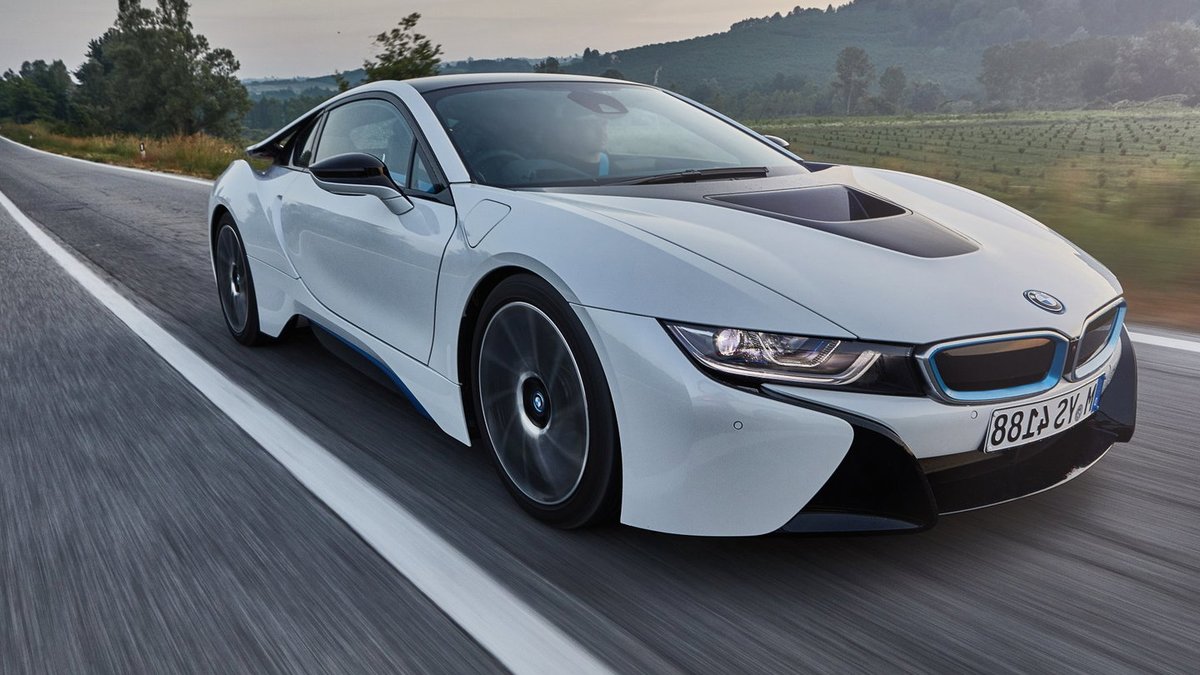
The BMW i8 was never an old-school performance car and, in fact, when it arrived it looked like a preview of what the performance car of the future might become. Its carbonfibre structure, plug-in hybrid powertrain, dramatic dihedral doors and concept-car styling made virtually everything else at the price look ordinary.
Its three-cylinder engine meant it never had the soundtrack or outright performance of more conventional supercars, but that rather misses the point. BMW stopped building the i8 in 2020 and still hasn’t created a direct successor. With electrified performance now completely normal, it seems particularly strange that the company which put something as adventurous as the i8 into production more than a decade ago no longer makes anything quite like it.
The Vauxhall VXR8 always felt slightly improbable in Britain. While everyone else was downsizing engines and introducing increasingly sophisticated turbocharged performance saloons, Vauxhall was selling what was effectively an Australian Holden with a huge V8 up front, rear-wheel drive and enough space for the family.
Later supercharged VXR8 GTS models were particularly outrageous, producing well over 500bhp and offering the sort of old-school muscle-car character that was already becoming rare when they were new. Holden’s demise ultimately killed any prospect of another one and Vauxhall’s modern line-up couldn’t be further removed from the VXR8.


