
A recent Ford patent application details a proposed system where parked vehicles could autonomously reposition themselves to prevent theft or suspicious behavior. The filing, submitted to the United States Patent and Trademark Office, explains how cars could identify threats, such as repeated glances through windows or circling vehicles, and then move to safer locations. In some scenarios, the car might park flush against a wall to obstruct access to cargo or make wheel theft more difficult.
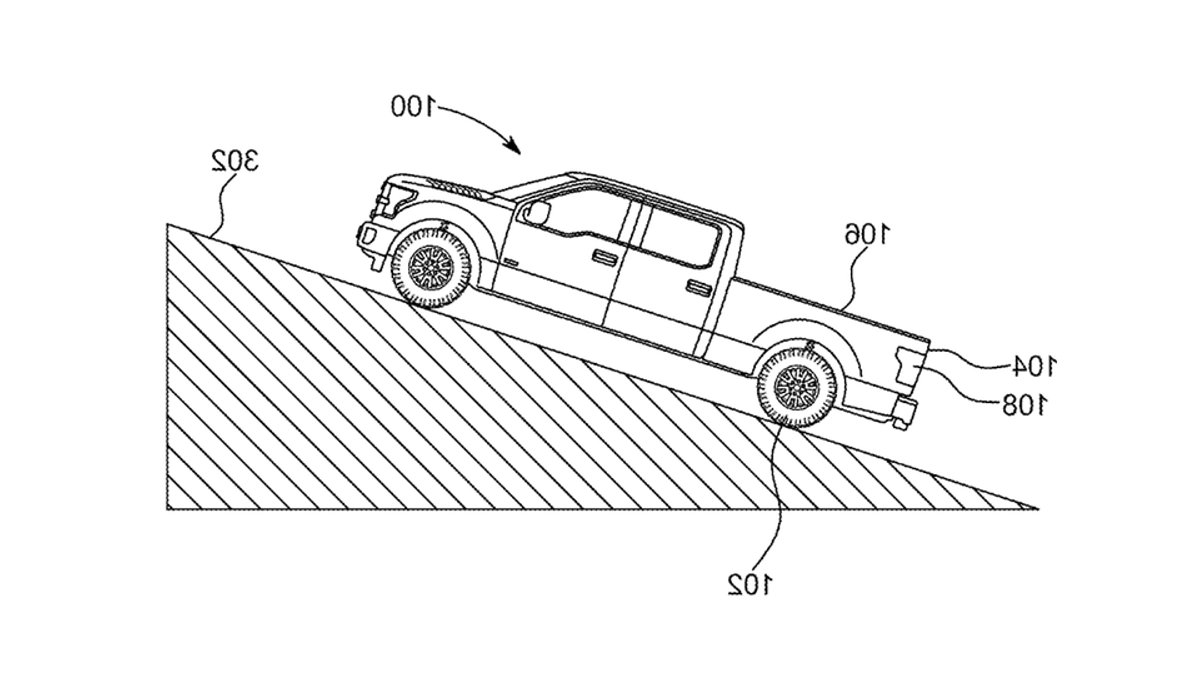
The system would also adjust parking positions to counter specific theft risks. For instance, it could park between two fixed barriers, like closely spaced walls or other vehicles, to prevent wheel removal. A vehicle equipped with air suspension might lower itself to the ground, making it harder for thieves to reach components like catalytic converters. The patent even suggests parking on uneven surfaces to complicate the use of a jack.
Beyond physical security, the system would protect cargo by positioning the vehicle to block tailgate or hatch access. Drivers could select whether to prioritize securing their belongings or their wheels before leaving. The patent notes that this approach could also deter theft of headlights or taillights if the car parks tightly against walls.
Read Also: Subaru revives manual WRX in Japan after years off
While still theoretical, the concept directly addresses real-world theft challenges. Wheel theft, in particular, has been well-documented, one test vehicle was found without wheels after being parked in a suburban carport. The system could also adapt if a car detects it is the only vehicle in a lot, either suggesting a new parking spot to the driver or relocating itself if fully autonomous.
Ford’s proposal goes beyond simple relocation. It incorporates multiple defenses, including physical barriers and environmental obstacles. A car might park at an angle or on soft ground to discourage thieves, combining both passive and active measures. The idea assumes vehicles could evaluate their surroundings, through sensors, cameras, or AI, and respond without driver intervention.
Wheel theft remains a widespread problem, especially for high-value vehicles. The patent’s proposed solutions, strategic parking, environmental obstacles, and cargo blocking, target common theft methods. If adopted, such systems could reduce losses, though they would not stop all criminal activity. The technology would likely work alongside existing security measures rather than replacing them.


