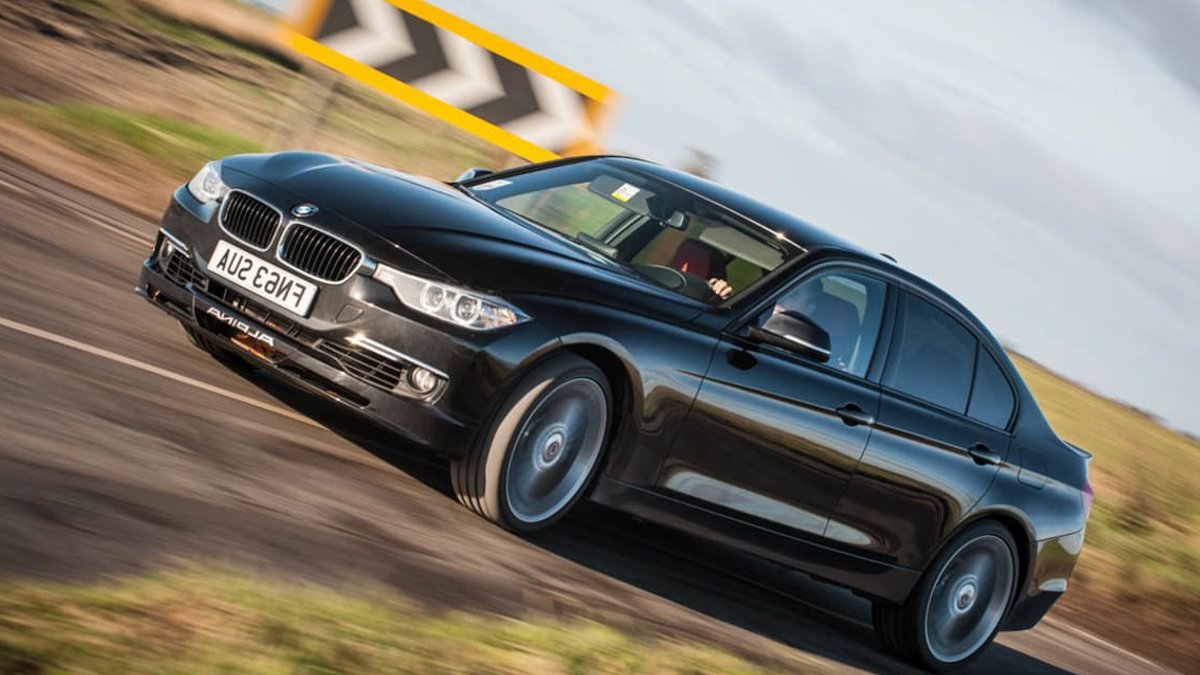
The Alpina D3 Biturbo arrives as the second‑generation version of the diesel‑focused 3‑Series, priced at £46,950 for the sedan. It claims the title of the fastest diesel‑powered production car, delivering 345 bhp and 516 lb‑ft of torque.
Engine and Powertrain
Unlike its predecessor, which used a four‑cylinder unit, the new model adopts BMW’s 3‑litre twin‑turbocharged inline‑six. The setup includes revised manifolds, a high‑capacity intercooler and an exhaust designed by Akrapovič, all managed by a fresh ECU map.
The larger intercooler volume helps keep charge temperatures low during prolonged high‑load operation, which sustains the strong torque output across the usable rev range. Akrapovič’s exhaust not only reduces back‑pressure but also provides a distinctive, resonant note that remains pleasant inside the cabin, especially at higher engine speeds.
The only gearbox offered is BMW’s eight‑speed torque‑converter automatic. Software tweaks cover the transmission, stability control, dampers and electric power steering, aiming for a more cohesive driving experience.
Chassis and Handling
Alpina stiffens the springs by roughly 40 percent compared with the standard BMW, pairing them with 20‑inch alloy wheels. The dampers are retuned to be softer under compression yet firmer on rebound, while the default “comfort” setting actually yields a softer ride than the base 335d.
The 20‑inch wheels accommodate low‑profile tyres, which enhance lateral grip and give the car a more planted feel in cornering without compromising ride quality.
Revised bushings, anti‑roll bars and front‑end bracing improve rigidity. The steering rack remains shared with the 3‑Series, but altered geometry and a firmer front structure give clearer feedback.
These changes translate into a more direct steering feel, allowing the driver to sense subtle weight transfers and maintain confidence when applying the abundant torque.
The front suspension uses a double‑wishbone layout, while the rear employs a multi‑link arrangement tuned for both comfort and agility.
Related: Alpina B4 Bi-Turbo Convertible beats BMW M4
Braking is handled by six‑piston front calipers paired with 340 mm discs, and the rear uses single‑piston units.
Performance and Efficiency
Peak torque arrives at 1,500 rpm and stays flat to 3,000 rpm, making acceleration feel immediate. The engine’s redline sits at 4,800 rpm, after which power tapers off. In “drive” mode the gearbox shifts almost unnoticed, while the manual‑style selector on the steering wheel offers rapid changes.
This broad torque plateau means overtaking maneuvers can be executed with minimal gear changes, providing a seamless surge of power when needed.
Stability control intervenes early when the rear axle receives the sudden torque surge, keeping the car steady on wet surfaces. Switching to “sport plus” loosens the intervention slightly, allowing a controlled amount of slip.
In real‑world testing the car managed an indicated 36.5 mpg, far below the claimed 53.3 mpg. Emissions measured at 139 g/km are surprisingly low for a vehicle with this output.
The gap between official and measured fuel consumption reflects the aggressive driving style required to unleash the engine’s full potential, yet even under hard use the figures remain respectable for a performance diesel.
The official figures list a 0‑60 mph sprint in 4.6 seconds and a top speed of 173 mph, matching many high‑performance rivals.
Reaching the claimed top speed demonstrates that the drivetrain and aerodynamics cooperate effectively, allowing the car to sustain high velocities on suitable roadways.
It feels surprisingly agile.
Related: Luxury Cars Blend Comfort With High-Speed Performance
The combination of lightweight alloy wheels, refined suspension geometry and responsive steering contributes to a nimble character that belies the car’s substantial mass.
Curb weight is approximately 1,650 kg, and the rear spoiler reduces drag by 0.02 Cd.
Compared with the earlier diesel version, the twin‑turbo powerplant pushes the envelope further, echoing how the brand has historically taken modest upgrades and turned them into noticeable gains. The shift from a four‑cylinder to a six‑cylinder mirrors a broader industry move toward higher displacement for torque‑heavy applications.
Pricing and Options
The model sits about £5,400 above a BMW 335d M Sport sedan, yet remains roughly £9,000 cheaper than a new BMW M3 while delivering comparable real‑world speed. Buyers can add any factory option available on the 3‑Series, though costs rise quickly.
Our test vehicle included a limited‑slip differential, a £1,990 extra that enhances traction on track days. Other optional equipment follows standard BMW pricing structures.
Alpina offers a four‑year, 50,000‑mile warranty, plus complimentary maintenance for the first two years.
Key specifications: inline‑six, 2,993 cc, twin‑turbo diesel; 345 bhp at 4,000 rpm; 516 lb‑ft torque from 1,500‑3,000 rpm; 0‑60 mph in 4.6 seconds; top speed 173 mph; emissions 139 g/km; fuel economy 36.5 mpg (measured).
Early resale data shows a depreciation rate about 15 % lower than the standard 335d after three years.
Production is limited to the 3‑Series platform, and delivery times align with BMW’s typical schedule for specialty models.


