
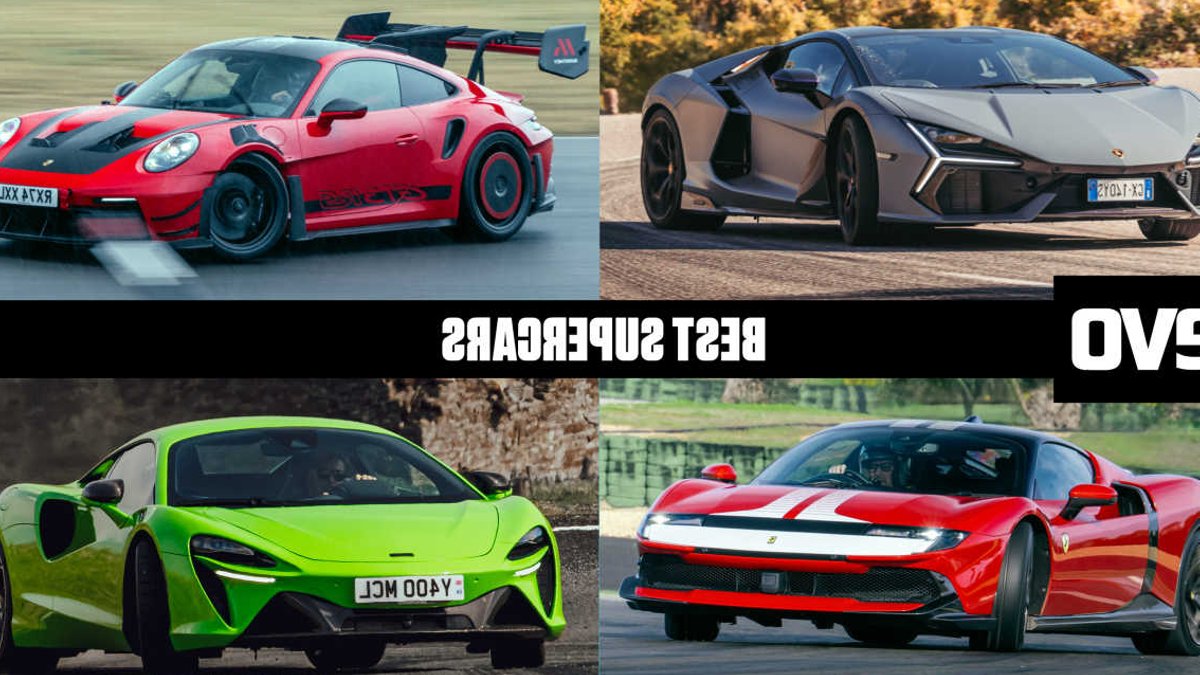
The supercar market is entering a surprisingly strong phase in 2026, with internal combustion engines receiving a reprieve from new regulations. Manufacturers are leaning into hybrid technology to boost performance, creating machines that are faster and more capable than ever before. This period offers the most diverse selection of high-performance vehicles in recent memory, from V12 grand tourers to track-focused hybrids.
A mid-engine Ferrari with a sharper edge
The Ferrari 296 Speciale represents the pinnacle of the brand’s current lineup. It carries the “Speciale” badge, a name that implies a harder, more extreme version of an already exceptional car. The first car to wear the badge, the 458 Speciale, remains one of the most celebrated modern supercars, and the new model has a difficult act to follow.
Ferrari has reworked the chassis of the 296 Speciale with revised springs, dampers, and a lowered ride height. The bodywork was redesigned to generate 435 kilograms of downforce. Power comes from a 120-degree twin-turbo V6 that has been boosted from 819 to 868 horsepower. This powertrain draws technical inspiration from the F80 hypercar, though Ferrari has tuned it to prioritize usability over raw aggression.
Despite the technical complexity, the Speciale retains the approachability that makes the standard GTB model so enjoyable. The car offers greater precision and stability, aided by a titanium exhaust and additional sound ducts. Critics note that while it may lack the absolute extremes of the F80, the technology from that vehicle trickles down to enhance the character of this road car.
There is a natural skepticism when manufacturers release a “special” edition that costs significantly more than the base model. In the case of the 296 Speciale, the added downforce and sharper chassis tuning provide tangible benefits on the track, justifying the higher price point for serious enthusiasts.
Related: Cadillac Unveils CT5-V Blackwing
Hybrid power and British grand touring
Aston Martin has entered the mid-engine era with the Valhalla, a plug-in hybrid that bridges the gap between a road car and a hypercar. The car uses a 4.0-liter flat-plane crank twin-turbocharged V8 paired with three electric motors to produce 1,064 horsepower. This places it in direct competition with the Lamborghini Revuelto.
While the Valhalla draws aerodynamic inspiration from the track-focused Valkyrie, it is designed with a broader focus. It aims to provide hypercar-level performance with a more usable character for everyday driving. The car features active aerodynamics that generate over 600 kilograms of downforce and a rear-biased handling setup that encourages playfulness at the limit.
Inside, the cockpit is low and F1-inspired, offering a surprisingly spacious environment for a car with such aggressive styling. The driving experience is defined by immense front-end grip and a progressive dynamic balance. However, the transmission lacks the absolute precision of some Italian rivals, and the engine redline is capped at 7,000 rpm.
The return of the V12
Lamborghini continues its commitment to the naturally aspirated V12 with the Revuelto. The new model replaces the Aventador and features a 6.5-liter V12 paired with three electric motors to generate 1,001 horsepower. This powertrain is mounted transversely behind the driver, a significant change from the longitudinal layout of its predecessor.
The shift to a dual-clutch transmission marks a massive improvement in shift speed.


