
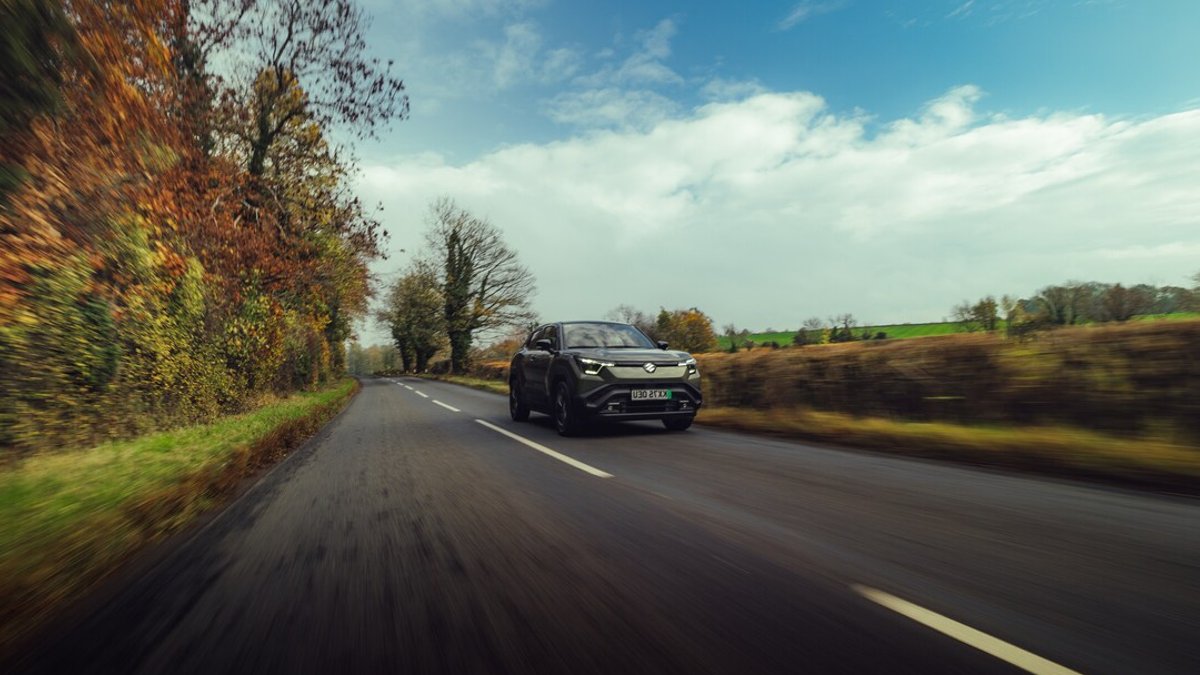
Maruti Suzuki’s e-Vitara is set to launch in India next month, and we got a chance to drive the made-in-India-for-the-world car in the UK. The e-Vitara isn’t an entirely new concept, as it was first showcased as the e-Survivor at the 2018 Expo, and later as the FUTURO-e at the 2020 Expo.
The e-Vitara is an important product for Maruti Suzuki, as it marks the company’s entry into the electric car market in India. With over 9,000 touchpoints and a market share of over 40%, Maruti Suzuki’s electric car will play a significant role in shaping the future of EVs in India.
They will help gauge the potential of electric cars in India, and the car’s success will depend on factors such as practicality, economy, and the charging network. The car’s design, features, and performance will be closely watched, and its impact on the Indian car market will be significant.
Design and Features
The e-Vitara has a typical Suzuki design with modern interpretations, featuring sharp-looking Y-shaped LEDs, a chiselled body, and prominent lines running along the hood and shoulders. The car comes in 11 different color combinations, including six single-tone colors and five dual-tone options.
Maruti Suzuki’s interior features a two-spoke steering wheel, a 10.25-inch infotainment screen, and a 10.1-inch MID.
Related: Mahindra XUV 7XO gets major overhaul
Performance and Charging
The e-Vitara comes with two battery options: 49 kWh and 61 kWh. The smaller battery pack produces 144 PS of power and 193 Nm of torque, while the larger battery pack produces 174 PS of power and 193 Nm of torque. The car’s claimed WLTP combined range is 264 miles, which translates to approximately 425 km.
Drive and Safety
During our short drive, the e-Vitara felt composed and comfortable, with a rigid ride that should work well on typical Indian roads.
The car also features a range of safety features, including ADAS Level 2 functions, ABS with EBD, electronic stability program, hill hold control, and multiple airbags.
As we drove the e-Vitara, it became clear that the car’s success will depend on its overall value proposition. With a semi-developed segment and many competitors thriving, Maruti Suzuki will need to differentiate the e-Vitara from other electric cars in the market. The company’s focus on hybrids has meant that it has entered the electric market a bit late, but this has also given it valuable lessons on the EV ecosystem and customer behavior in India.
The e-Vitara’s launch in India will be closely watched, and its impact on the Indian car market will be significant. With its made-in-India-for-the-world tag, the e-Vitara has the potential to make a significant impact in the electric car market, and its success will depend on its ability to deliver overall value to customers.


