
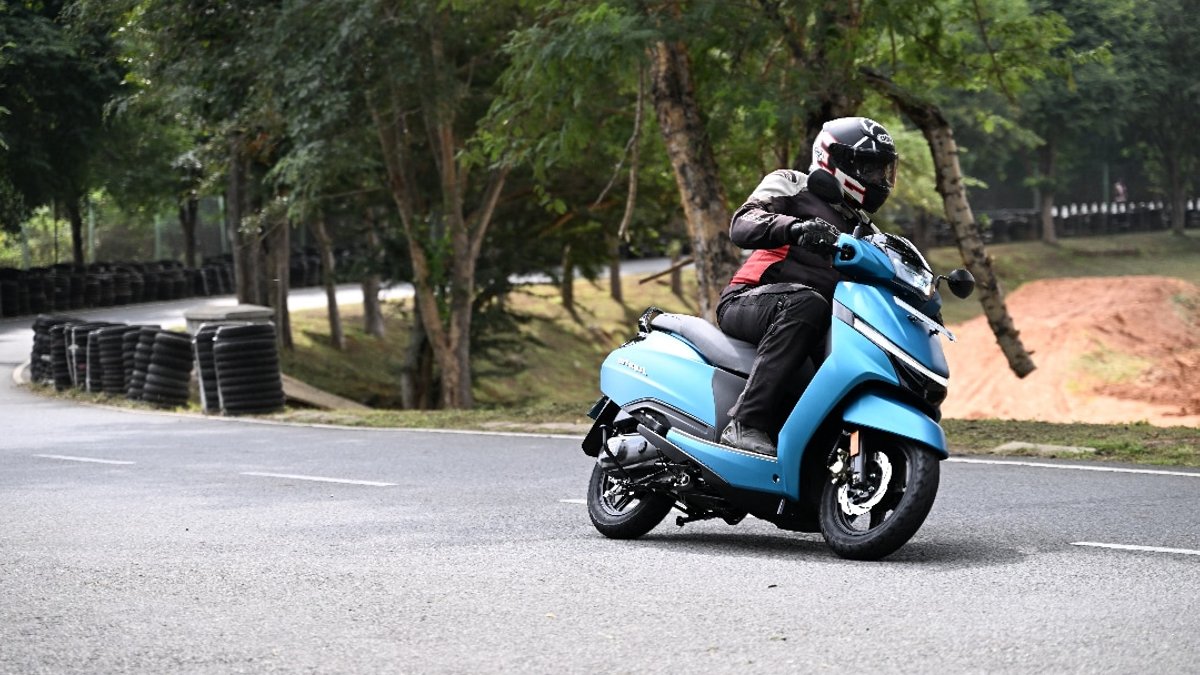
TVS has unveiled a refreshed version of its flagship Jupiter 110 scooter, marking the first major redesign since the model debuted over a decade ago. The new iteration arrives with a larger 113.3 cc engine, updated chassis, and a suite of modern features that aim to keep the bike competitive in India’s crowded 110‑cc segment.
Design and Build Quality
The top‑spec variant displayed at TVS’s Hosur test track showcases a more contemporary aesthetic. A long daytime running light spans the front apron, while integrated turn indicators replace the older “bird‑eye” lamps. Both front and rear now sport 12‑inch wheels, and the scooter is finished in a piano‑black paint scheme that replaces the previous chrome accents.
Inside, the instrument cluster features a reverse LCD screen that presents speed, trip data, and real‑time efficiency metrics. A high‑speed warning alerts riders when they exceed 80 km/h, and eco‑ and power‑mode indicators respond to throttle input. The overall fit and finish appear solid, with minimal visible screws and a clean panel layout that suggests a quality‑focused assembly process.
Related: Suzuki Burgman 2026 impresses in first test ride
Powertrain and Performance
Under the seat sits a new 113.3 cc single‑cylinder fuel‑injected engine equipped with an intelligent start‑stop system (ISS) that shuts off the engine after a three‑second idle at traffic signals and restarts it automatically when the throttle is applied.
For many riders, the most noticeable benefit is the comfort that has long defined the Jupiter line. The upright riding posture, generous footwell, and well‑placed glovebox contribute to a relaxed experience, especially on longer urban trips.
From a practical standpoint, the new Jupiter 110’s blend of modest power, efficient fuel consumption, and user‑friendly features could appeal to commuters seeking a reliable daily ride without the premium price tag of larger‑displacement scooters.
Technology and Safety Features
It feels modern.
Related: Mahindra XUV 7XO gets major overhaul
The dashboard also tracks average fuel economy and displays eco‑mode status, encouraging riders to adopt efficient throttle habits. While these metrics are promising, real‑world fuel‑efficiency figures will need verification once the scooter reaches the market.
Pricing and Market Position
Pricing details have not been disclosed, but the new model is expected to sit between ₹54,349 and ₹91,000, aligning closely with the current price range of the older Jupiter 110 variants. With four trim levels slated for release—fewer than the previous six—the company appears to be streamlining its lineup while positioning the scooter just below the TVS Jupiter 125, which sells for ₹79,000‑₹91,000 ex‑showroom.
Given the Jupiter series’ strong sales record—often outpacing the combined output of TVS’s other scooters—the refreshed 110‑cc offering could help maintain the brand’s dominance in the segment. Its updated design, lighter weight, and added tech may also attract riders considering the long‑standing Honda Activa, which currently leads the market.


